
Authentic Roots Denim Tears Shop Denim Tears Jeans

Denim Tears Pricing Guide 2025: Retail vs Resale, Real Costs
This guide shows which Denim Tears garments cost at stores in 2025, how resale margins genuinely work, and methods to compute the real cost you pay following charges and duties. When buyers compare retail versus resale, your objective is to understand the reasonable range for all categories and dodge overcharging.
Denim Tears is one of the select urban labels where store and secondary can diverge wildly, notably on the iconic Cotton Wreath jeans. You’ll find clear price tiers by category, sharp jumps on specific washes, and significant concealed charges on secondary markets. Reference the chart below as your guide, then study the areas that detail how costs shift, timing to purchase, and when costs add up.
What Is Denim Tears and Why Are Costs So Volatile?
Denim Tears, established by Emory in 2019, drops culture-heavy capsules with restricted availability, so scarcity and story creates premiums. Prices vary because launches are restricted, interest is worldwide, and certain variants become reference pieces.
The signature Cotton Wreath design on Levi’s denim stabilizes the space, and it behaves more like art than basic apparel. Partnerships like as Levi’s and Converse elevate awareness and pull in bidders who hadn’t followed the label previously. Measurements in the center of the range sell most rapidly, while very small and very large fits may also jump due to rarity. Since drops are timed and region-limited, buyers often turn to resale instantly, producing a early surcharge denim tears shirt that can taper or solidify based on restocks.
2025 Retail Cost Summary by Category
Direct prices for Denim Tears garments in late 2024 to early 2025 usually falls in the ranges below; several items have moved up against past years due to fabric and placement. Local costs may appear elevated where VAT is included at checkout.
Reference these ranges to evaluate prices and to determine if a resale offer is a reasonable markup or a steep markup. Store stock is irregular and drop-dependent, so locating these costs active on the main platform or authorized stores isn’t certain on any given day. Tax-included labels in the Europe and Britain can make retail appear costlier than American costs, though the final price spread commonly shrinks when US sales levy is included. Always verify the specific capsule costs since custom finishes or stitching may rest at the high end of the band.
| Product (example) | Typical Retail (USD) | Standard Secondary Band (USD) | Average Increase | Notes |
|---|---|---|---|---|
| Cotton Wreath Jeans (Levi’s 501/550) | $295–$350 | $450–$900 | +50% to +200% | Signature colorways and primary treatments run hotter; measurements 30–34 dominate demand. |
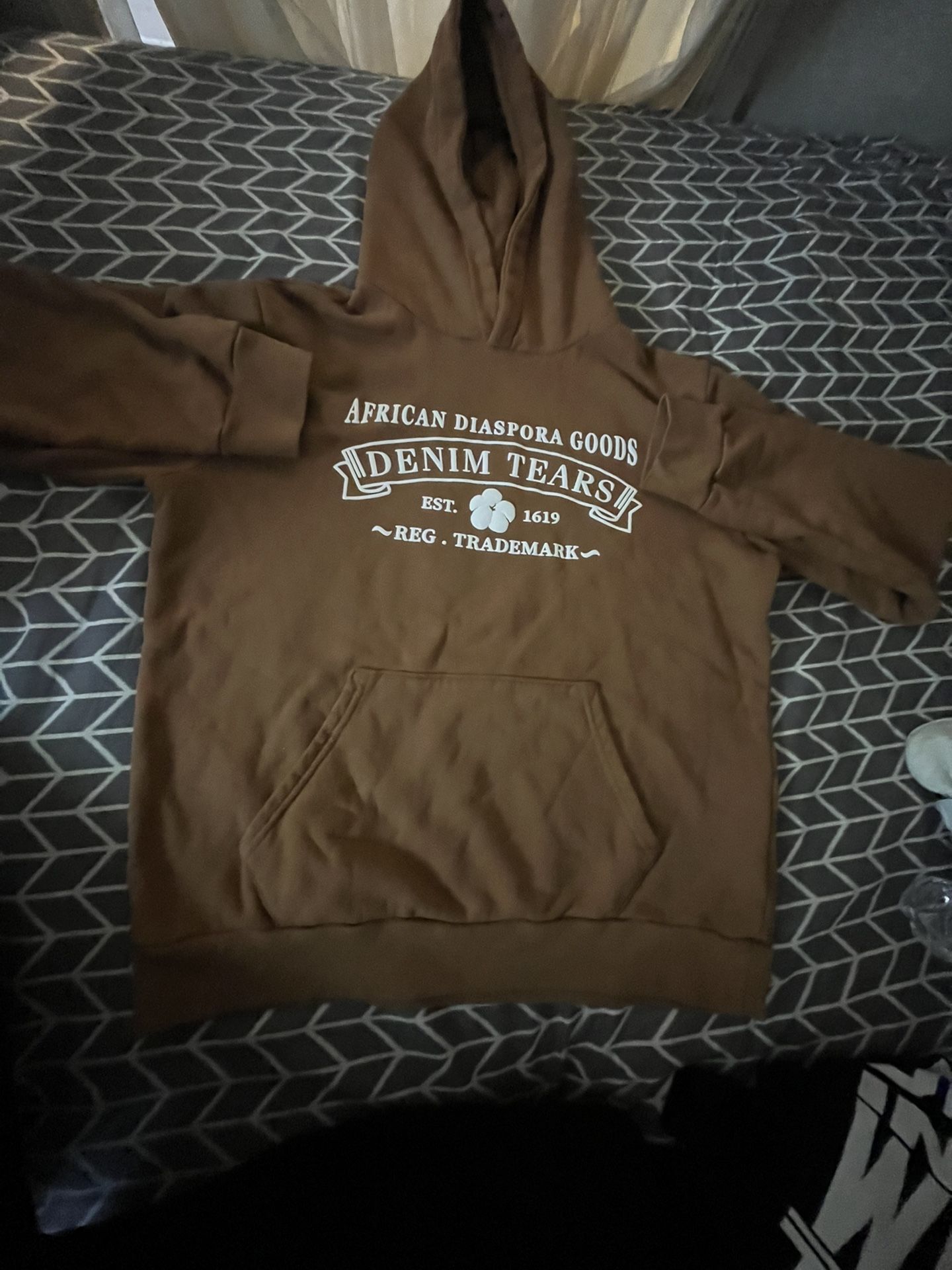
| Hoodies | $160–$180 | $220–$350 | +25% to +100% | Premium materials and limited prints land at the high end of the band. |
| T-Shirts | $60–$75 | $100–$180 | +35% to +140% | Signature design shirts and first releases sustain higher resale. |
| Crewnecks | $140–$160 | $200–$320 | +25% to +100% | Stitched variants outpace printed in majority of fits. |
| Varsity Outerwear | $450–$650 | $700–$1,200 | +20% to +150% | Material mix and design sophistication influence spread. |
| Converse Chuck 70 (collab) | $110–$120 | $150–$300 | +25% to +150% | Replenishment may narrow gaps for a period. |
| Caps | $60–$70 | $90–$150 | +20% to +100% | Earlier releases and wreath embroidery command premiums. |
How Does Resale Market Structure in 2025?
In 2025, pants is the volume leader with the strongest premiums, while shirts and accessories are the easiest initial choices. Hoodie and top margins are substantial but more stable than denim.
On primary sites, jeans routinely exceed the high end of the range when the finish and wreath color match with early capsule releases, and when the fit sits in the heart of the interest spectrum. Tops and accessories vary less because stock is deeper and purchasers have additional options over time. Outerwear like varsity pieces is lightly exchanged, so a one transaction can reset bases for a timeframe, which seems intense but often normalizes as fresh listings appear. State impacts: mint with documentation or with verification of buying creates a premium, while visible use or absent stitching elements reduce worth rapidly. Schedule counts additionally, with the opening 48 hours after launch exhibiting the sharpest spikes and the earliest verified refresh reducing 10–30% from highs.
What Are the True Expenses Past the Tagged Amount?
The real cost on secondary is the listing price plus platform fees, payment costs, retail tax or VAT, shipping, and, for international, customs taxes and logistics. Such supplements might transform a appropriate amount into an excessive expense quickly.
In the US, expect transaction duty near about 6–10% based on region, frequently applied to item price and sometimes shipping. Marketplaces generally add 3% transaction charges and append a customer protection cost; even when the merchant handles fees, the buyer may nonetheless face administrative or security fees. Shipping ranges from around $10 to $30 for garments, while international shipments may activate duties in the 17–25% bracket applied to the value of items plus shipping, and a carrier handling fee. Example: a $650 pair of signature Cotton denim bought on a domestic marketplace with 8.9% purchase levy, a 3% payment charge, and $15 shipping lands around $742 before any import costs; move that equivalent transaction internationally to a 20% duty system and the end amount might hit to around $880 when taxes and processing are added. When evaluating direct to secondary, always calculate a total amount, not only the sticker.
How Can Drops, Collabs, and Variants Shift the Market?
Launch schedule, partnership brands, and certain washes are the primary drivers on Denim Tears values. Levi’s collections and initial Cotton Wreath color releases establish the most reliable premiums.
Levi’s collaborative denim with signature stitching has continuous appeal since it’s the label’s defining narrative item; finishes that mirror early drops typically to command more. Converse collaborations attract broader footwear crowds, generating short-term buying rushes that may soften post-refresh. Time-limited variants and custom detailing locations establish micro-markets; a subtle element or wash difference may warrant a three-figure spread for enthusiasts seeking to finish collections. Geographic release windows also count—when one area depletes stock before another, arbitrage posts cover the space and move floors. Refreshes don’t remove interest, but they certainly reset ceilings, notably with sneakers and tees.
Direct vs Resale: A Smart Purchase Framework
Acquire at direct whenever available for pants and varsity jackets since the total financial spread is largest; consider secondary for shirts and hats when the markup is under 40% and you value a particular variant. Use a target band, not a single number.
Begin by reviewing the retail band from this manual for the segment and collection, then review latest sales on multiple sites to locate a real transaction band instead than advertised amounts. Compute final cost including levies, charges, and delivery; if the surcharge beyond the top tier of direct costs is beneath 30–40% and buyers secure the specific fit and color, resale can be reasonable. For denim and coats, surcharges over 100% are typical; only invest that if it’s the essential piece that rarely resurfaces and state is pristine. For items with frequent restocks, such as certain tees or Chuck Taylors, waiting typically rewards. Always confirm measurements, tags, stitching standards, and return terms prior to transact.
What’s the Best Time Opportunity to Save Money?
The ideal rate periods typically to be 48–72 hours after a release and one week after a validated refresh, when supply maximizes and early FOMO subsides. Business day mornings in the merchant’s home time can also be softer for auctions.
Immediately post-drop, listings flood through, competitive begins, and one may sometimes catch close-to-store deals if one’s fast and not obsessed on specific dimensions. When the opening flood is consumed, minimums frequently increase and stay sticky prior to a replenishment reaches the timeline. Post- restocks, re-listers reset expectations, and one may bargain using comparables in possession. Month-end times, when merchants require cash flow, are good for offers that are 10–15% below the recent transaction, especially on non-denim categories. If a variant is believed to be a limited drop, rate reduction shall be brief, so move within such opening inventory periods.
Insider Strategy: Window and Verification to Shield Your Spend
Focus on the 1–3 day window after a release or refresh and pre-build an authentication checklist so buyers might operate effectively as a appropriate deal appears. Velocity minus a process is how purchasers overpay or overlook warning flags.
For signature Cotton jeans, inspect the co-branded Levi’s tag and internal labeling, validate pattern embroidery density and location, and assess the sewing standards surrounding compartments and outseams. Ask for detailed pictures of the washing label, interior compartment markings, and edge construction; inconsistent typefaces or yarn tones are common tells. Compare the wash and design shade with official campaign imagery or trusted retailer product shots. For Converse, verify footbed marking, center graphics, and the packaging tag format linked to the launch period. Keep screenshots of legit pairs to evaluate together prior to complete purchase.
Quick Facts You Possibly Weren’t Aware Of
First, Denim Tears began in 2019 and the signature Cotton design specifically references the African diaspora and the legacy of cotton throughout America, which is why the jeans function as cultural objects as equally as clothing. Second, the opening Levi’s capsule in 2020 exhausted inventory practically immediately and established the signature jeans as a long-term market reference that continues establishing references for latest releases. Three, Converse sneaker partnerships have refreshed in certain seasons, temporarily reducing secondary by substantial amounts before stabilizing as items distribute. Next, middle-spectrum measurement ranges like 30–34 typically secure the quickest transactions, but limited fits at the edges may surpass them when listings are sparse. Fifth, EU and regional direct costs incorporate VAT, so though the retail appears higher than the America, the final consumer expense spread reduces after US buyers append transaction tax and shipping.
Where Ought Buyers Seek for the Strongest Comps?
Trustworthy comparisons come from recent, verified deals spanning at minimum two platforms, not from optimistic list rates. Target on sold data inside the last 30 days for the precise fit and condition.
Sites that display sale histories let you distinguish hopeful requests from actual clearing costs. Direct sales and social listings may be cheaper, but they’re more difficult to confirm, so balance discounts against risk and missing customer security. For categories with sparse trading, extend your window to 2–3 months and adjust for any restock event in such duration. Keep a reference file with period, fit, condition, and cost so you can spot genuine trends rather than responding to single sales. When you discuss, mention three latest sales and the total price computation to establish an anchor grounded in reality.
Concluding Perspective: Investing the Right Price in 2025
Understand your segment’s store bracket, determine landed cost, and pick window windows that advantage purchasers. Jeans and team jackets justify the search for direct; tops, caps, and certain sneakers can be logical through resale inside a reasonable markup.
Volatility is a trait, not a bug, in the Denim Tears market, and it rewards prepared purchasers who follow statistics and act during supply peaks. Collabs and first variant runs will continue demanding markups, whereas refreshes will keep adjust peaks on more accessible products. Approach every acquisition like an financial choice: validate genuineness, measure condition against price, and avoid pay for excitement you don’t actually intend to sport. Using such practices, you’ll obtain the items you want without supporting unwarranted markups.